
What Wedding Photographers Wish Couples Knew (And How to Help Them Capture Perfect Shots)
Reading time: 10 min
Your photographer is one of the most important wedding suppliers you’ll hire. They’re the ones responsible for capturing every tear, laugh, and tender glance from your big day. But here’s something most couples don’t realise until it’s too late: there are a handful of completely avoidable situations that make a photographer’s job significantly harder, and in some cases, can ruin irreplaceable shots entirely.
Over the years I’ve had conversations with fellow wedding photographers who have shared their biggest frustrations – because who doesn’t like to complain every now and then. In no particular order, here’s everything you need to know:
1. DJ Lasers During the First Dance: The Hidden Photo Killer
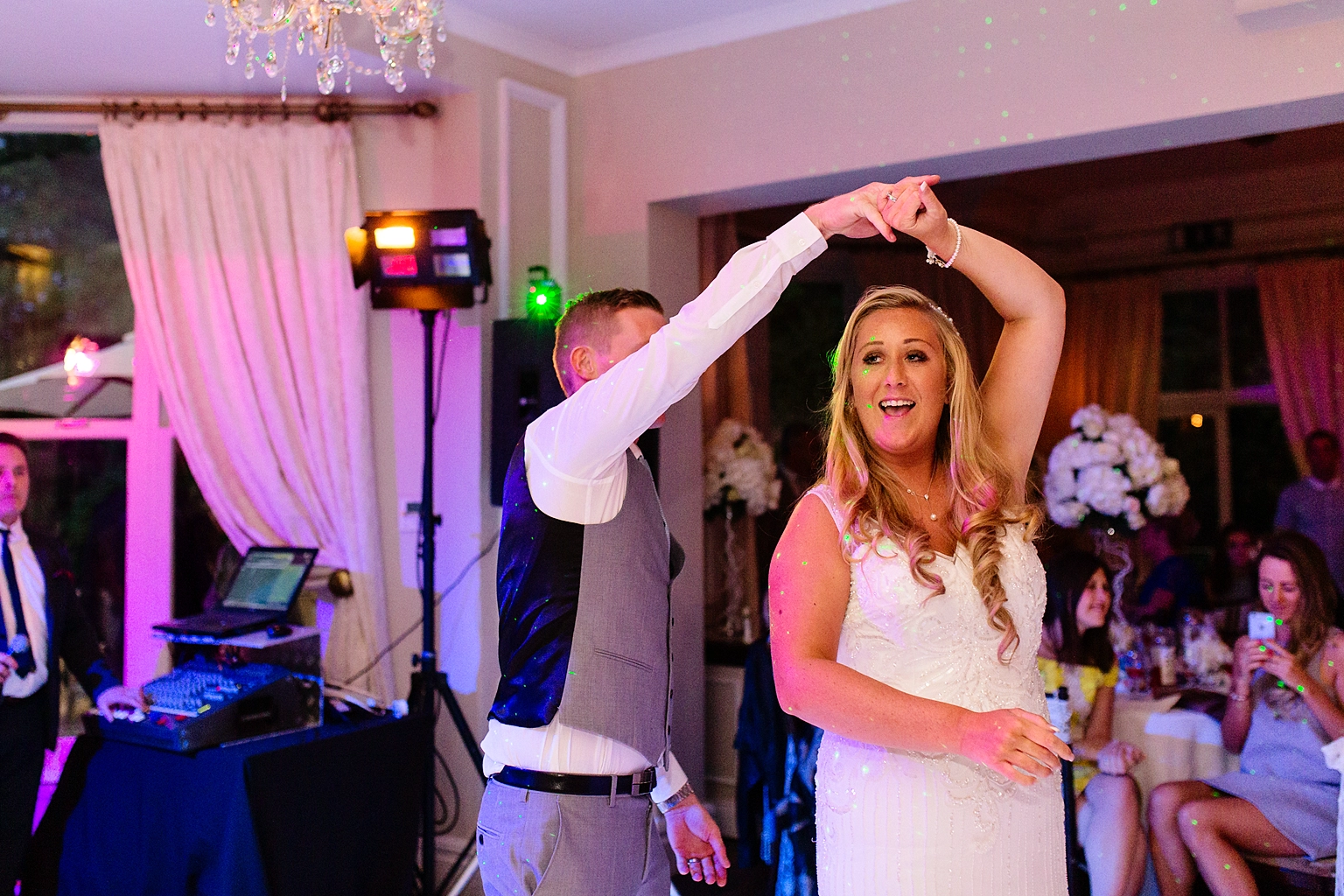
This is one of the most common and most heartbreaking problems in wedding photography. You’ve spent months planning your first dance. You’ve chosen the perfect song. The moment arrives – and the DJ floods the room with a rainbow of spinning laser lights.
On the dancefloor, it looks magical. In photographs, it’s a disaster.
Laser lights project hundreds of tiny, bright, coloured dots directly onto the couple’s faces and clothing. No matter how skilled the photographer, those dots cannot be edited out without painstaking, time-consuming retouching – and even then, skin tones underneath are often destroyed. The result is photos that look speckled, and sometimes a bit amateurish through absolutely no fault of the photographer. That said, I can remove these dots if they are too distracting.
The simple fix: Ask your DJ – in writing, before the wedding – to switch off any laser or strobe lighting during the first dance, and to use a single soft spotlight (often called a “follow spot” or “pin spot”) instead. A warm white or amber spotlight looks stunning in photographs and still creates a romantic atmosphere in the room. You’ll have both the beautiful ambience and the beautiful photos.
Pro tip: Include this in your DJ briefing document and mention it again on the day. DJs default to their usual show – it’s up to you to tell them otherwise. I’ll usually have a quick word with them at the reception to see what lights they have set up.
2. Guests Blocking the Aisle with Their Phones During the Ceremony
Few things are more professionally frustrating – or more upsetting in hindsight – than a photographer losing the shot of the kiss because a guest has stepped into the aisle with an iPad.
It happens at almost every wedding. The officiant announces “you may now kiss the bride,” and suddenly six people leap from their seats, arms outstretched, phones held high, crowding the aisle. Your photographer – who has carefully positioned themselves at the end of that aisle for the entire ceremony – now has a wall of devices between their lens and your first married kiss.
That image of the kiss at the altar is one of the most sought-after shots of the entire day. Losing it to a forest of iPhones is devastating, and there’s nothing the photographer can do in that moment.
The simple fix: Have an unplugged ceremony – or at the very least, an unplugged aisle. Ask your officiant to make an announcement at the start of the ceremony asking guests to remain seated and to keep phones and cameras put away. A short, warm, well-worded request from the person at the front is surprisingly effective.
You can also place a small sign at the entrance to the ceremony space. Something like: “We’ve hired a professional photographer to capture today. Please be fully present and leave the photography to them – you’ll receive the photos soon!” Guests almost always respond well when it’s framed positively.
PS: If one of your guests is a photographer, I’m happy to have them stand next to me and grab a few photos.
3. Running Behind Schedule (And Not Telling Anyone)
Wedding days run late. It happens. Hair takes longer, the buttonholes won’t cooperate, someone can’t find their shoes. Photographers are used to this — but the problem is when no one communicates it.
Your photographer has planned the day around your timeline. If the ceremony runs 45 minutes late, that’s 45 minutes eaten out of couple portraits, family formals, and golden hour. Golden hour – that beautiful warm light in the hour before sunset – is fixedd. The sun doesn’t wait. Photographers can adapt, but only if they know what’s happening.
The simple fix: Give your photographer a realistic timeline (add buffer time in — always), and if things start running late, have someone — your coordinator, your maid of honour, anyone – send a quick message. That single text gives your photographer time to mentally restructure the day and protect the shots that matter most to you.
4. Families Who Disappear After the Ceremony
Family formal portraits – the group shots – are genuinely one of the most logistically difficult parts of a wedding day. Not because of any technical challenge, but because the moment the ceremony ends, family members scatter. They head to the bar, they pop outside for air, they slip away for a cigarette, they start chatting to guests they haven’t seen in years.
Getting 40 people into organised groups in a short window of time, without a proper list, while nobody knows where Uncle Graham has gone, costs enormous amounts of time. And time is the one thing a photographer never has enough of on a wedding day.
The simple fix: Prepare a written family shot list in advance, and share it with your photographer at least two weeks before the wedding. Appoint one or two people (ideally confident, loud ones who know the family well) to act as “wranglers” – their job is to gather and hold the groups while the photographer is shooting. When everyone knows the plan, a full set of formals can be done in 20 minutes rather than an hour.
5. Dark or Candlelit Venues With No Ambient Light
Atmospheric venues are stunning – exposed brick, candlelit tables, fairy lights draped across low ceilings. But very dark venues create a genuine technical challenge. A photographer can bring off-camera flash, but in a reception space, heavy flash usage can look harsh, flat, and intrusive. It changes the feel of the whole room.
Some venues actively restrict flash photography, or the couple explicitly doesn’t want it. Without adequate ambient light, this puts photographers in an extremely difficult position.
The simple fix: When you book your venue, ask them what options exist for increasing the ambient light during the reception. Many venues have overhead lighting they don’t normally use but can switch on at a low level. Ask your wedding coordinator to ensure there’s enough light for photography – not just enough to “set the mood.” Share this conversation with your photographer so they can advise on what’s workable.
6. Not Protecting Time for Couple Portraits
The couple portrait session – even just 20 to 30 minutes alone with your photographer during golden hour – consistently produces some of the most treasured images from a wedding day. And yet it’s often the first thing couples sacrifice when the day starts running late, or when they feel guilty “abandoning” their guests.
Those photos of just the two of you, in beautiful light, will be on your walls for the rest of your life. Your guests will barely notice you’re gone for half an hour.
The simple fix: Schedule the portrait session into your timeline and protect it. Tell your venue coordinator and your wedding party it’s happening. Think of it as a non-negotiable appointment, not an optional extra. Your photographer will thank you, and so will your future self.
7. Guests Who Use Flash During the Ceremony or First Dance
Even a single burst of flash from a guest’s camera at the wrong moment can ruin a long-exposure shot, wash out a carefully lit scene, or cause the subject to blink or react. During a church ceremony in particular, where photographers are often working in low light with careful, considered settings, a sudden flash from a pew can destroy the image being captured.
The simple fix: Include a note in your order of service or ceremony programme asking guests to turn off camera flash. Your officiant can mention it too. Most guests simply don’t realise the impact their camera’s flash has – they’re trying to help, not hinder.
8. Not Briefing the Venue on Photographer Access
Some venues – particularly historic churches, stately homes, and licensed buildings – have restrictions on where photographers can stand or move. Your photographer may only find this out on the day itself, having planned a shot that turns out to be off-limits.
The simple fix: When you do your venue walk-through with your photographer (strongly recommended), raise access specifically. Ask the venue coordinator: “Are there any restrictions on where our photographer can stand or move?” Share the answer with your photographer so they can plan around it – not discover it on the day.
A Final Word: Your Photographer Is On Your Side
Everything on this list comes from the same place – wedding photographers care deeply about their work and about giving couples images that will last a lifetime. None of these frustrations are complaints about difficult people. They’re almost always the result of things nobody thought to mention, or simply didn’t know.
The couples who get the very best from their wedding photographers are the ones who communicate openly, prepare a realistic timeline, brief their guests, and trust the process. Do those things, and your photographer will move mountains for you.
Are you a wedding photographer with something to add to this list?
Or a couple who found this helpful? Drop a comment below – I’d love to hear from you.
Leave a Reply